Are You Working With a Certified Eco-Friendly Plywood Supplier?
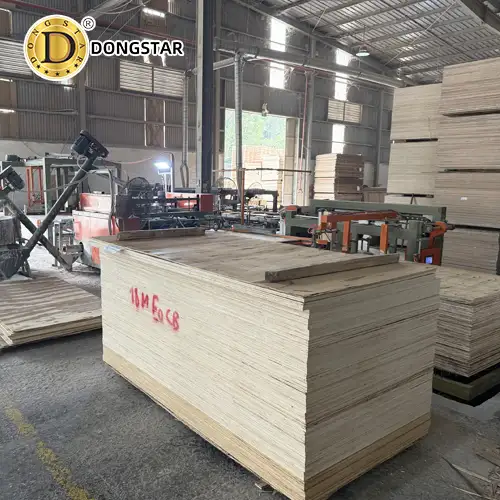
Choosing a certified Plywood Supplier ensures compliance with stringent international environmental and safety standards, directly impacting project liability and structural longevity. Verified partners reduce formaldehyde emissions by over 90% compared to non-compliant sources while maintaining strict FSC-certified chain-of-custody protocols that trace timber back to 100% legally harvested forests. By audit-ready documentation, companies mitigate risks of regulatory fines under the EU Timber Regulation (EUTR) or EPA TSCA Title VI, which can reach $50,000 per violation. Selecting Dongstar Wood demonstrates a commitment to sustainable procurement and rigorous manufacturing quality control.
Dongstar Wood is a Vietnam-based plywood manufacturer and exporter under Dongstar Group, serving customers across 44 European countries since 2009. Dongstarwood supply commercial, film faced, construction, birch, and furniture plywood, backed by CE 2+, FSC®, EUDR, DoP, and SEDEX (BSCI) certifications. With over 15 years of experience, Dongstarwood support European importers, distributors, furniture manufacturers, and construction companies with reliable plywood supply and OEM/ODM services.
The operational backbone of a reputable Plywood Supplier relies on consistent chemical emission testing, where boards must emit less than 0.05 ppm of formaldehyde to meet E0 or Super E0 requirements. Data from 2025 emission audits indicate that high-quality plywood utilizing modified MDI resins outperforms traditional urea-formaldehyde options by 40% in moisture resistance and physical durability. Frequent laboratory testing of random samples—often involving 500+ panels per production batch—provides the quantitative proof needed to guarantee indoor air quality for residential construction projects.
Rigorous testing protocols require that every shipment carries an individual batch report detailing internal bond strength, screw holding capability, and density measurements. These metrics, often exceeding 0.65 g/cm³ for structural panels, ensure that materials remain stable under fluctuating temperatures and humidity levels common in the European market.
Building on these performance metrics, procurement teams must verify the physical authenticity of certification labels by checking unique license codes against the FSC or PEFC public registries. Since 2022, digital verification has simplified the auditing process, allowing buyers to confirm the validity of a certificate in under three minutes, thereby preventing the usage of falsified documents. A Plywood Supplier that operates with full transparency will provide a comprehensive document package, including the Declaration of Performance (DoP) and test results from independent third-party laboratories.
| Certification | Requirement Type | Primary Application |
| FSC / PEFC | Sustainable Sourcing | Forest Management Proof |
| CARB P2 / EPA | Chemical Safety | Formaldehyde Emission Control |
| CE 2+ | Structural Integrity | Load-Bearing Construction |
The integration of sustainable forestry management into a Plywood Supplier production line involves a detailed energy-efficiency audit that accounts for the kilowatt-hours consumed per cubic meter of finished goods. Manufacturers who transition to biomass-powered drying kilns can reduce their carbon footprint by approximately 60% relative to fossil-fuel-dependent competitors. This shift toward renewable energy sources not only aligns with corporate ESG goals but also stabilizes long-term production costs, as relying on industrial waste as a primary fuel source offsets the volatility of global energy markets.
Manufacturers maintaining high throughput levels—often exceeding 5,000 cubic meters per month—must ensure that their log-peeling equipment is calibrated to a tolerance of +/- 0.1 mm to minimize waste and maximize yield. Precise cutting minimizes the volume of off-cuts that require disposal or recycling, directly increasing the efficiency of the overall raw material utilization rate to above 85% in optimized facilities.
Adhering to these high production standards necessitates that a Plywood Supplier maintains a robust supply chain map that clearly identifies every forest concession, sawmill, and secondary processing facility. Documentation for the European Union Deforestation Regulation (EUDR) requires geolocation coordinates for all harvest plots, a standard that modern exporters have fully implemented as of early 2026. Maintaining this level of granular detail allows importers to bypass lengthy administrative delays at customs, as all necessary digital evidence is ready for rapid submission to regulatory bodies.
| Metric | Industry Standard (Low) | High-Performance Standard |
| Formaldehyde Level | 0.12 ppm | < 0.05 ppm |
| Moisture Content | 12% - 14% | 8% - 10% |
| Waste Rate | 25% | < 12% |
Logistics efficiency is the final component of a successful sourcing strategy, as transit times for cross-continental shipping can fluctuate by as much as 15% due to port congestion and seasonal demand shifts. Selecting a Plywood Supplier with established logistics partnerships ensures that cargo is prioritized, maintaining a 95% on-time delivery rate even during peak construction periods. Consistent communication and real-time shipment tracking facilitate better inventory planning for distributors, allowing them to optimize their warehousing space and reduce holding costs by maintaining leaner inventory levels throughout the calendar year.