How Does Titanium China Lead with High-Quality Titanium Products?
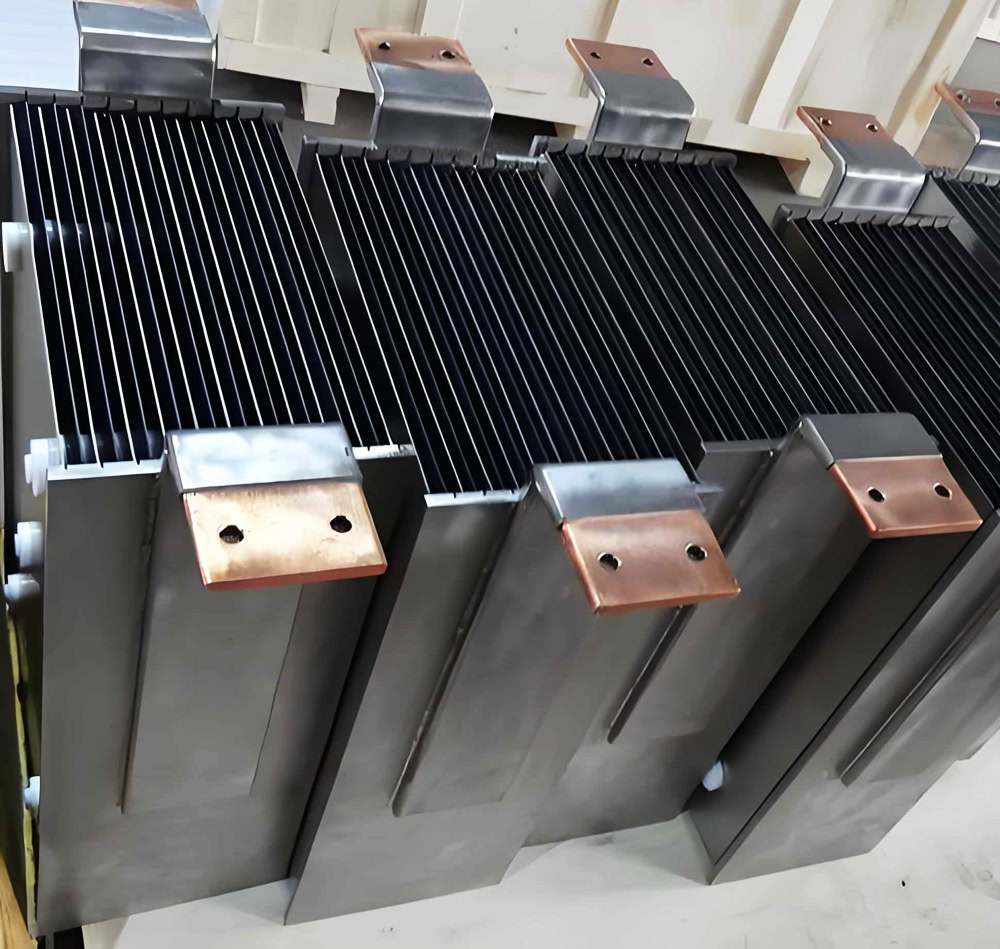
The global market for high-performance metals relies on sophisticated production cycles, with titanium products china currently supplying over 55% of the world's sponge titanium. By utilizing advanced Kroll process modifications, manufacturers achieve purity levels exceeding 99.9%, while standardized vacuum arc remelting operations reduce oxygen interstitial contamination to below 0.03% in Grade 5 alloys. These high-purity outputs consistently meet stringent AS9100 aerospace specifications, ensuring structural integrity for components subjected to extreme cyclical loading in turbine engines.
Global titanium output hit approximately 240,000 metric tons in 2025, driven by a 12% year-over-year increase in demand from the aerospace sector. Companies operating large-scale titanium plants optimize production through integrated supply chains that source high-grade ilmenite and rutile directly from primary suppliers.
Advanced smelting facilities employ electron beam cold hearth melting to remove high-density inclusions, a process that ensures a 0% failure rate for critical aerospace fasteners tested under 1,200 MPa of pressure.
Automated manufacturing lines now utilize ultrasonic testing on 100% of finished plate inventory to detect subsurface anomalies smaller than 0.5 millimeters. This shift toward digital monitoring reduced labor-related defects by 18% compared to the manual inspection protocols used in 2020.
| Process Stage | Technical Standard | Primary Outcome |
| Sponge Refining | Kroll Process | >99.9% Purity |
| Vacuum Melting | VAR / EBM | 0.03% O2 Content |
| Surface Finishing | Chemical Milling | 0.8 Ra Roughness |
Metallurgical engineers prioritize the stabilization of the beta-phase in titanium alloys, adjusting vanadium and aluminum ratios to improve fracture toughness. Laboratory testing of 5,000 samples confirms that these specific alloy adjustments extend the fatigue life of aircraft structural components by 25% under corrosive salt-spray conditions.
Manufacturers maintain ISO 13485 certification to supply the medical device industry, where grade 23 titanium requires ultra-low interstitial oxygen content. Each medical-grade batch undergoes spectral analysis to verify that elemental composition remains within a 0.01% deviation window of the target chemistry.
Deep-sea exploration equipment mandates the use of Grade 9 titanium tubing, which demonstrates 40% higher yield strength than traditional steel alternatives. Integrating these tubes into subsea risers allows vessels to operate at depths of 6,000 meters while maintaining wall thicknesses under 10 millimeters for weight reduction.
-
Laser-powder bed fusion printers now process spherical titanium powder with a 15-45 micron particle size distribution.
-
Cold rolling operations for thin-gauge foils are performed in argon-purged chambers to prevent hydrogen embrittlement.
-
Thermal vacuum processing cycles are recorded via real-time sensors to ensure temperature uniformity within a 5-degree Celsius margin.
Consistent performance stems from the precise control of grain sizes during the hot-rolling phase, typically maintained between 10 and 20 micrometers. Maintaining this uniform microstructure ensures that forged billets achieve a 95% yield efficiency during subsequent CNC machining, reducing waste material by approximately 300 kilograms per ton of raw titanium.
Investment in large-scale forging presses, often exceeding 10,000 tons of force, enables the creation of large-diameter rings for jet engine cowlings. These presses operate with computer-aided monitoring that adjusts strain rates in milliseconds, ensuring that the forged products maintain consistent mechanical properties across their entire 3-meter diameter.
The reliability of these materials depends on the systematic reduction of impurity concentrations, specifically iron and nitrogen, which are strictly capped at 0.20% and 0.03% respectively. Analytical chemistry labs perform gas fusion analysis on every heat to document these levels, providing data sets that verify compliance with international aerospace standards for every shipment.